Showing posts with label technology. Show all posts

Wednesday, April 3, 2013

Kinderchat Welcomes PBS Kids!!!


We are SO EXCITED to welcome 


to next week's
Monday April 8th 9PM New York time!

Please join Matt Gomez and the "Team Tech" crew to talk technology and math with 
WOW!

Wednesday, January 9, 2013

The Power of Learning Beyond Your Classroom

Today's post is by @klirenman, a grade one teacher in Surrey, BC, Canada.

In July 2011, on the suggestion of a friend, I joined twitter for professional purposes. Within ten days I was enrolled in an on-line conference and I was blown away by what I was hearing.  One session in particular, led by Aviva Dunsiger (@avivaloca), made me realize how much more I could be doing with my young learners.     

I started following Aviva, and other early primary educators.  Soon I was following close to 100 people and some of them were following me back! My brain was constantly spinning with the new ideas being shared by these incredible educators. But it was more than that. I was getting to know these people as real friends. Our discussions were real and genuine connections were forming.  I was becoming a connected educator and my Personal Learning Network (PLN) was forming.

Fast forward almost 18 month and my PLN has exploded, and continues to grow daily. I am constantly in awe of those I learn with and the “real” connections that I have with many of the people I know from twitter. I have never been so inspired to learn, grow, and share because of the people that I was interacting with.

But what does any of this have to do with my young learners?

Twitter made me realize how important being connected really is. How there is so much benefit in learning from others both near and far.  Yet no matter how near or far you live from someone you often have more in common than not.  I wanted my students to understand that too.


As soon as I was able I introduced my students to blogging as a way to connect with the world.  Our class blog and their individual blogs were places to invite the world in.  They were places to have conversations, like stepping stones to learning beyond our classroom.  I modeled commenting as a way to create and extend conversations, and over time my students did all the composing of the comments.  We “blogged around the world” and visited classrooms through their class blogs.  We left them comments: often curiosity questions we had.  It was the least expensive field trip we could take, and yet it taught us so much.  My students learned about how small the world really is, and as much as we are all very different we are all very similar. My students learned a lot about and from others.


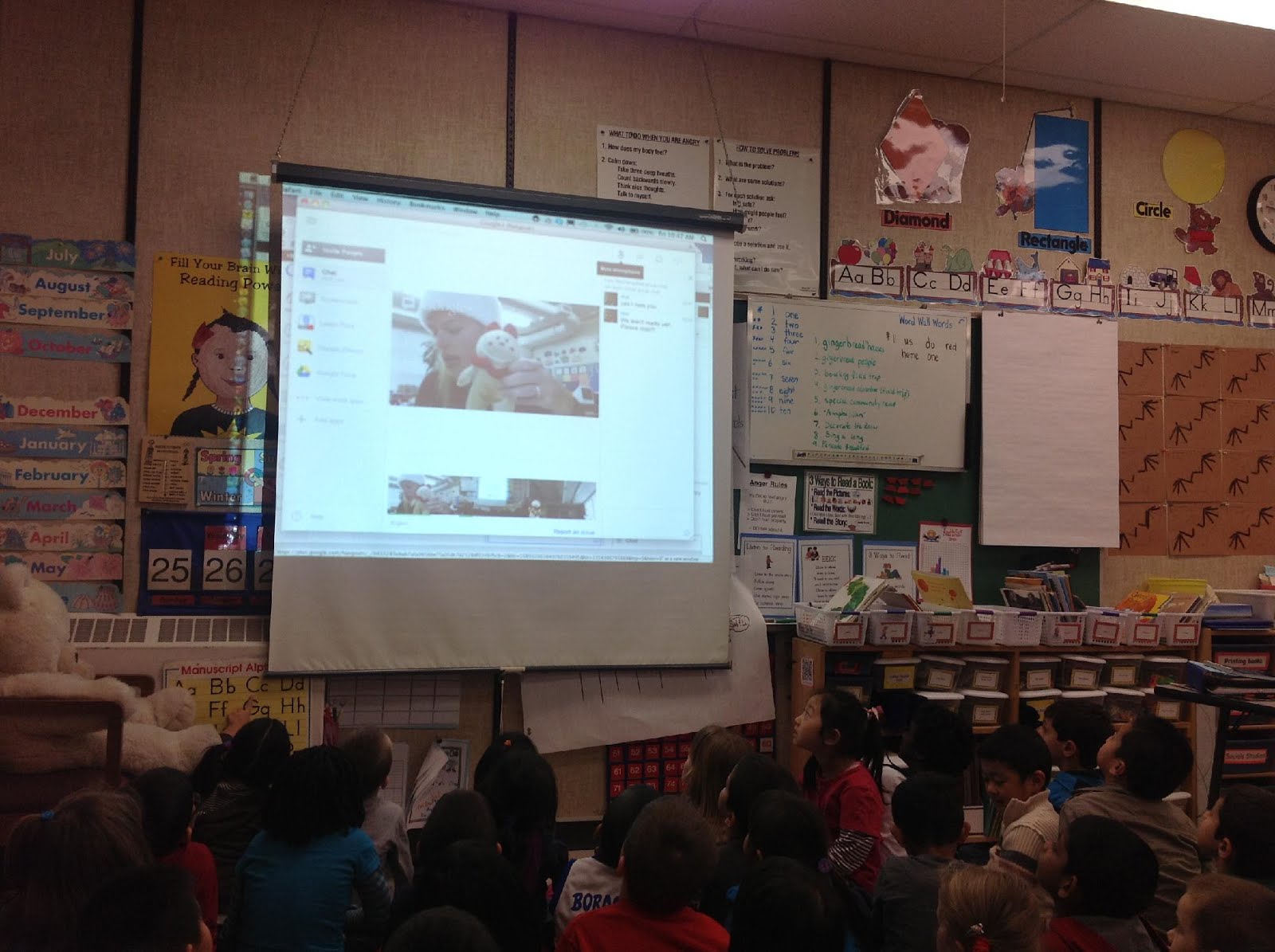
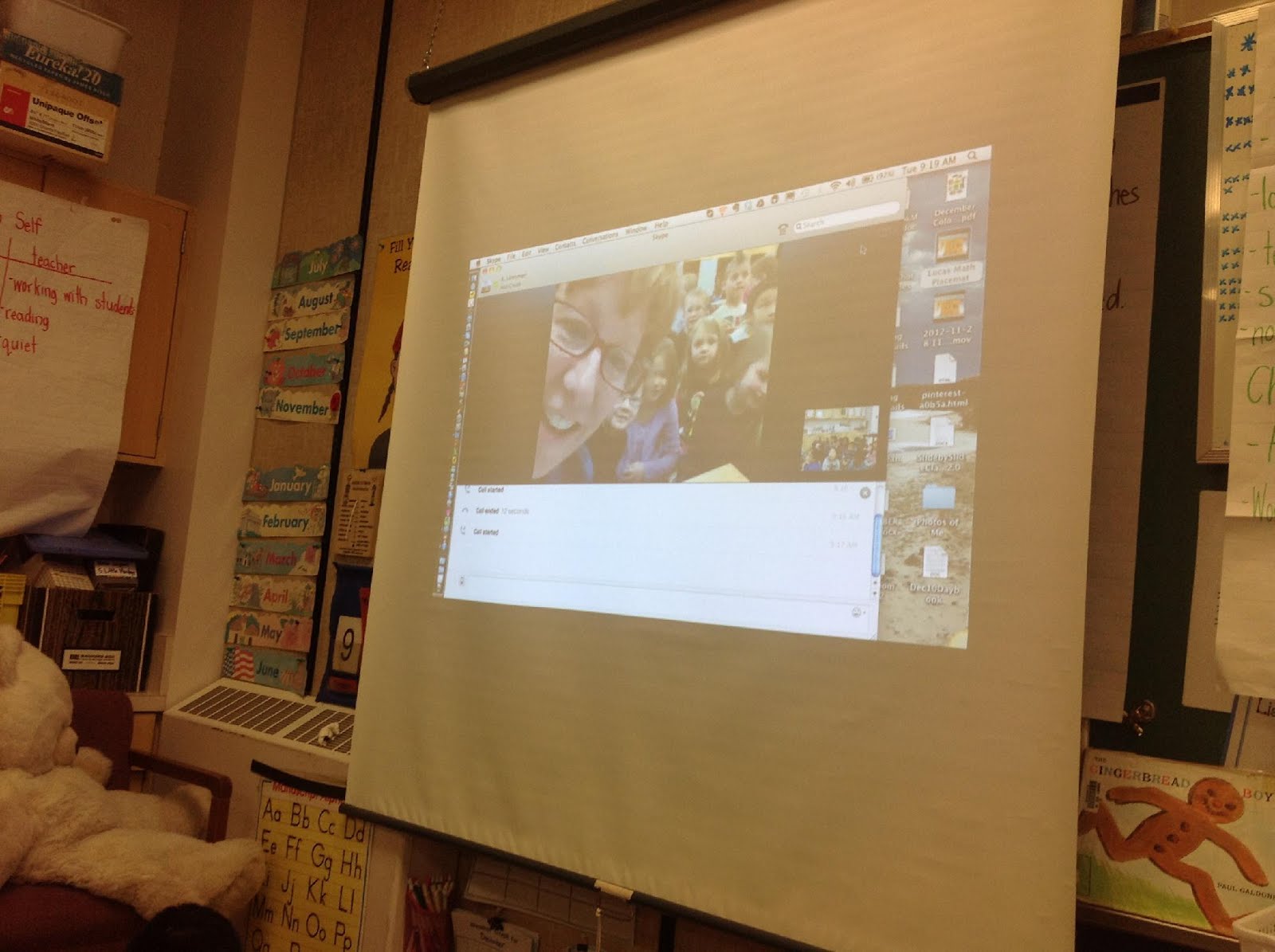
I took it a step further by inviting other classes and teachers into our classroom through video conferencing (Skype, FaceTime, Google Hangout).  This allowed my students to ask their curiosity questions and have them answered by adults or kids their own age. Other students also asked them questions and so my students had to use their brains and their voices to answer them.  The video conferencing helped support dialogue, curiosity, and reflection amongst my students.


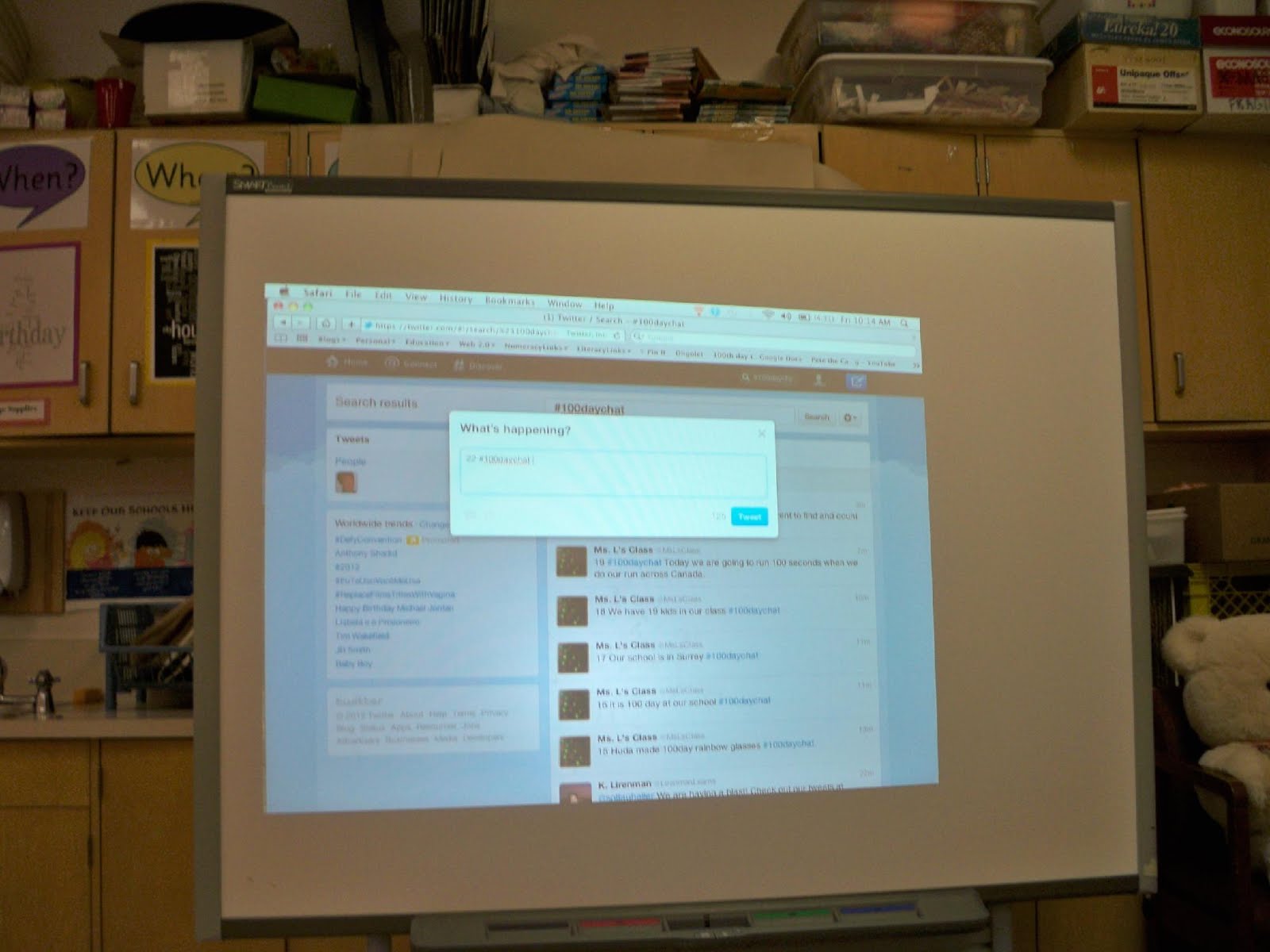
We also utilized twitter to connect with others. The cool thing about twitter is that if you direct a tweet directly to a class they will see it and in more cases than not they will respond to it too. Using hashtags to have conversations on a specific topic, or to share learning about a specific topic helped us get connected too.


I can’t imagine my class not being connected to other classes both within our school, and our school district, but way beyond.  So if you haven’t had your class connect with another class it might be something to try.  Connections are powerful in so many different ways.   Happy learning!


Karen says: "I am a grade one teacher in a public school in Surrey, BC, Canada. This is my 21st year of teaching and in the past I have taught ESL K-7,K, K/1, 1, and 1/2.  I’m a total learning geek but I love sharing what I discover with the intention of helping others along the way.  While Vancouver is my home, I have lived and worked in London England, and Melbourne Australia.  I love to travel and learn about different cultures and traditions.  I share some of the spinning in my brain on my professional blog at www.learningandsharingwithmsL.blogspot.ca .  I maintain a class blog at www.mslirenmansroom.blogspot.com.  My grade one students blog individually at www.kidblog.org/mslirenmansclass2012.  You can always find me and my class on twitter - me at @klirenman and my class at @MsLsClass."

Come back tomorrow for a post from @scrappymummy!

Saturday, January 5, 2013

The Use and Abuse of Technology in the Classroom

Today's post is by Kathy Cassidy, a Canadian grade one teacher.


More and more primary teachers now have access to technology in their classroom. Whether it is an iPad or an iPod touch, a desktop or a laptop, a growing number of teachers are either being given access to this technology by their school boards or bringing their own devices to class to help students to learn. Because of the multitude of choices and opportunities that technology enables, this is a positive development.

Having access to books does not mean that the students in my classroom will learn to read. I need to make careful pedagogical choices and use those books in a way that will gently and purposefully help those children to become independent readers. Very few children can make this leap themselves. Most need a thoughtful teacher to guide them.

In the same way, having technology in my classroom does not mean that my students will discover how to use it as a learning tool. I have to carefully select and structure what it is used for so that it becomes truly educational. As with reading books, should not our goal be to develop independent learners? Here are my personal abuse and use lists for the handling of devices in the classroom.

Technology Abuses

Technology should not be used as simply a digital worksheet. There are many apps and Internet sites available that are simply a technological version of a paper task, forcing students to practice over and over a skill that they may already have mastered. Don’t get me wrong. Skills do need to be practiced. I just happen to think that students should spend most of their time using technology for more creative
purposes.

Technology should not be used as a way to keep students occupied. A small number of computers or devices in a classroom can be an inviting center, whether it is an assigned or a self-chosen one. If you use technology in this way, choose wisely when you decide what the students will do with the technology. There are many, many creative options available. It should not be just to keep students busy while you work with small groups of children. (They’re working on mouse skills? Really?)

Technology should not be used to do what can be done without it. Drawing a picture on an app or a computer program and labeling it is a worthwhile activity, but why bother if that activity is an end in itself? It may as well have been done on paper. Technology should allow you to do something new with that picture, such as sharing/publishing it in some way.

The good news is that there are other, better options for using technology. My heart does a happy dance when I see these.

Technology Uses

Technology should be for accessing what was inaccessible. In the past, my teaching materials were limited to what was in my classroom and in the school’s library. Now there are a plethora of materials available online to fill any teaching need I have, limited only by my online search skills. From classroom-ready videos such as those of Mercer Mayer and Dr. Jean to sharing and learning with other teachers on Pinterest or Twitter to accessing the creative commons photos of thousands of photographers—well, let’s just say there is no longer an excuse for not having appropriate resources.

Technology should be for doing good things in better ways. For example, hearing books being read aloud is an important part of primary literacy. Long ago, listening to books on a cassette tape became listening to books on a CD. Now, there are online books and apps that do a much better job of this, highlighting the words as they are read aloud.

Technology should be for sharing with the world. The environment that our students are growing up in is wired for sharing. The hardware and the software that is available make it easier every day for children to share what they are learning with the world. Even young children can share their learning using drawings, images, blogs, video and digital portfolios. By sharing their artifacts digitally, students invite the involvement and support of their parents, grandparents and anyone who sees their work.

Technology should be for connecting. Before the advent of the Internet, classrooms were forced to be isolated learning hives. Now, those hives can all be interconnected as classrooms can easily link with other classrooms and experts to ask questions, compare experiences and learn together. Tools such as Skype, Twitter and blogs make connecting and collaborating with classrooms from anywhere a possibility.

Technology should give choices. We are blessed to have a lot of technology in my classroom and my favourite part of that is the choice it gives my students in both their learning style and in sharing what they have learned. When allowed to choose, some students prefer to read on iPads or computers. Others choose paper books. I think choice is important as we accommodate the variety of needs our learners have.

Technology should not just allow us to do traditional in a different way; it should allow us to do things that we thought were not possible.


Kathy Cassidy is an award-winning Canadian grade one teacher who is passionate
about literacy and about connecting her classroom with the world. Kathy has a
classroom blog and her students each have their own blogs that are digital portfolios
reflecting their learning in all subject areas and include images, video, podcasts and
other evidence. In addition to teaching, Kathy is an author and speaker. You can also
find her online at her professional blog and on Twitter.

Tomorrow: "The One Center Child," by @teachermeg.

Thursday, December 22, 2011

Amy on TV!

Check out @happycampergirl on TV showing how she tweets with other #kinderchat classrooms!

Sunday, October 2, 2011

Kindergarten Around the World 2011-12!

Update: More info on Kindergarten Around the World can be found here, on our shiny new blog!
It seems it is time to find an online home for details of this, my own pet #kinderchat project! 

Kindergarten Around the World has recently generated lots of interest, and lots of questions, so I am hoping the project description below, will answer most of your questions about participating. Please note that the 2011-12 project is currently full for English-speaking classes in Canada and the US. I am still accepting sign-ups from French-speaking classes from any country (Canadian classes may need to be matched with classes in other regions of Canada), and English-speaking classes outside of Canada and the US. I may be able to accommodate other languages, as well. 

To help increase the diversity of the project, I need help spreading the word to overseas schools! Please pass this link on to any international teachers who may be interested.


Kindergarten Around The World 2011-12

Kindergarten Around the World is a twitter-based virtual exchange project, allowing young students to experience and explore life in another country by building a relationship with a class of similarly-aged children. It was piloted using 8 classes in 2010-11, and may potentially include over 100 classes this year.

The project is based out of Calgary French and International School (www.cfis.com) located in Calgary, Canada. The coordinator (me!) is Amy Murray (@happycampergirl). The Toronto Star recently wrote an article about the project, which can be found here: http://www.thestar.com/news/article/1052956

Most participating classes have students between the ages of 4 and 6; however, other age groups can participate if they are open to being matched with younger students.

Information for participating classes

Each participating class be assigned a partner class at from another country. Partner classes must:

  • Have regular internet access.
  • Have (or be willing to create) a Twitter account for their class.
  • Be willing to check their twitter account at least 3 times a week, answering questions, and asking questions of their own.

Goals:

By developing a relationship with a kindergarten class in another part of the world, participating students will:
  • Compare and contrast their own daily lives with those of other  students around the world.
  • See themselves as part of a larger, international community of Kindergarten-aged children
  • Develop an awareness of and appreciation for other cultures
  • Reflect on their own school lives and daily experiences.
  • Explore the use of technology as a tool to communicate and build relationships.

Premise and general outline:

  • Each class will create a fictional student who is a member of their partner class.
  • Using a variety of media, students will create a story (or series of stories) featuring this character going through daily life in the country and school of their partner class.
  • Using Twitter to ask and answer questions, classes will gather information about their partner class and country, to create stories that accurately reflect life in that country and region.

The project will be directed by students’ ideas and interests, so activities may vary from one partnership to another. Possible activities:


  • Virtual tours of classrooms using digital video.
  • Skype conversations between classrooms.
  • Student journals regarding the experiences of their fictional character.
  • Completing a special craft that is also being done by their partner class.
  • Learning and playing a game that is popular in their partner class.
  • Making and eating a snack that is typical in their partner country.
  • Celebrating a special holiday that is significant to their partner class
  • Creating a collective storybook (or multiple books) about the adventures of their character.
  • Learning a song or poem that is part of their partner class’s daily routines.
  • Graphing daily temperature and weather at home and in partner class's location.
  • Exploring websites related to partner schools and countries.


Culminating Project
Classes are encouraged to create an electronic story or presentation about their fictional student, in a format that can easily be shared with their partner class. Possible tools include prezi.com, storybird.com, voicethread.com, and glogster.com. This presentation will integrate everything students have learned about their partner classroom and country.

Here is an example of a project from last year: http://prezi.com/ydg3pwlmstuw/ella-en-indonesie-no-photos/?auth_key=7dae362cd44760626de70bd16587c0bdbea7c0c7.

General Timeline
Teachers can expect to receive contact information for their partner class some time in October 2011, and are welcome to start tweeting with their partners at any time after that. The intention this year is to officially kick-off the project in November with an exchange (via snail mail) of cards or drawings. Schools who celebrate or acknowledge winter holidays such as Christmas are welcome to exchange greeting cards. Schools who do not celebrate these holidays are welcome to exchange drawings or introductory notes. Each teacher partnership can agree on a format that is appropriate for their students.

The "research" part of the project, where classes use twitter to learn about one another, can follow any timeline that works for both teachers. The 2010-11 pilot project went on for just over a month, which felt like not enough time to adequately explore all the things that caught the children's interest.

Some teachers may choose to make the project their primary "theme" for a set period of time, others may choose to weave it into their existing program. There are no firm rules about how to integrate the project into your classroom -- as long as it is working for you and your partner teacher, you are doing it right!

Please note that the project is currently full for English-speaking classes in Canada and the US. I am still accepting signups from French-speaking classes from any country (Canadian classes may need to be matched with classes in other regions of Canada), and English-speaking classes outside of Canada and the US.

Teachers who would like to participate can fill out the form found here: http://ow.ly/6xD8Z . Completing the form is understood as a commitment to participation; having a class withdraw creates tremendous disappointment for their partner class. The secret password for the last question of the form is "GLITTER." (If you received a different password in an e-mail from me, please use the password that appears in the e-mail. Different passwords help me keep track of where the signups are coming from!)

Teachers or administrators who would like more information can reach me at mllenuit@gmail.com.

Thanks for helping to spread the word!

Smiles & Sunshine; 
Amy

Monday, April 11, 2011

To blog or not to blog

Well, it has been a while since I posted any commentary to go with the archive, hasn't it? But how could I resist the opportunity to be all meta, and blog about tweeting about blogging? Did you REALLY think I would let THAT pass me by?

Anyway, tonight's chat was as enjoyable, engaging, and uplifting as always. I love love love when newcomers comment on how we are the nicest chat on all of Twitter. I love that we (both collectively and individually) are developing digital reputations as good citizens and kind, helpful, human beings. Tonight's topic included some discussion of parental concerns regarding classroom blogs. I think there is still a significant amount of fear out there about The Big Bad Internet. Who better to help put those fears to rest than a group of kindergarten (and kindergarten-at-heart) teachers?

Nicely done, folks.

Here is the archive, read all about it.

xo
-Amy

P.S. The answer to the title question is, clearly: TO BLOG!

Monday, February 14, 2011

Archive to Tech Topic: Integrating Social Media in the Kindergarten Classroom

Holy Violet Valentines, tonight's chat was a whirlwind. Several weeks ago, when Heidi and I planned this topic, our vision was a conversation about the nuts and bolts of working social media into regular classroom routines. As seems to happen so often, it turned into far more than we envisioned. Of course, it should not surprise us that kindergarten teachers are passionate advocates for the decisions we have made about using social media with our students. Let's be honest, most of us are passionate about the exact brand of pencil crayons we use...

It is certainly not unusual to encounter debate around the use of technology, and even more so, social media, with our youngest students. In my experience, those debates usually follow a pattern: those opposed to social media with young children do not use it in their own lives, and those in favour of its use are frequent users, themselves. Tonight's debates, however, were unique in that: by the very definition of #kinderchat, EVERYONE present uses and sees the value of social media for themselves. There is no one in the crowd shrieking: "Twitter is silly and self-indulgent!!!" We are all Twitter users. We all participate in a chat for like-minded professionals. And yet, the range of opinions on using SM with students was tremendous.

I often tell my students: "When something is hard, that is when you're learning the most." It is easy and pleasant to chat away an hour with people whose opinions mirror mine exactly. Tonight's chat was challenging to many of us, and I think that means... we learned.

Here is the archive. Happy reading.

Coming up next week: Put your thinking caps on as we reflect on: Social Justice and Cultural Sensitivity.

xo
-Amy